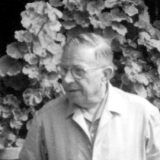
Sartre
Jean-Paul Sartre1905–1980
What Sartre argues and who answers him, as Marci Shore presents it in her Yale lectures European Intellectual History since Nietzsche: 26 claims, and 22 places where another thinker builds on him or breaks with him. Each claim is our paraphrase and links to the minute of the lecture it comes from.
Man is nothing else but that which he makes of himself.
Jean-Paul Sartre, "Existentialism is a Humanism". The epigraph Shore gives lecture 13.
The core ideas
The 5 claims the lectures spend most time on.
Existence precedes essence: no human nature is given in advance. We arrive in the world first and only afterward make ourselves into something definite.
Put simply Sartre's slogan "existence precedes essence": there is no human nature set in advance. We first find ourselves in the world, and only afterward make ourselves into someone in particular.
Nothingness, for Sartre, is freedom rather than something to dread: what is not yet determined is precisely the open room in which we make ourselves.
Put simply Sartre: where Heidegger's "nothingness" points to death, Sartre's means what is not yet settled about us. That is not meant to depress but to free: it is the open space in which we make ourselves.
Sartre's moral imperative is about choosing, not about what gets chosen: no code says which option is right, and declining to decide is itself a decision one answers for.
Bad faith (mauvaise foi) is not the everyday English sense of hidden motives but self-deception: a lie in which the same person is both deceiver and deceived.
Put simply Sartre's "bad faith" does not mean, as in everyday English, acting from hidden motives. It means self-deception: lying to yourself, so that you are both the liar and the one lied to.
Being looked at makes me someone's object, and that very fact brings home that the looker is a subject. In Sartre's words, "I cannot be an object for an object."
Put simply Sartre: when someone looks at me, I become an object for them. Only a subject can make me an object, so that is how I discover the looker is a person, not a thing.
Who Sartre answers, and who answers him
Each entry joins one of his claims to another thinker’s. The handwriting names the link; the line beside it says which kind. “Our inference” marks a link Shore does not state outright.
Sartre and Martin Heidegger 1889–1976
HeideggerDasein is no detached observer. It is always already being-in-the-world: doing things, caring about things, alongside other beings, with no outside position to withdraw to. L12 · 24:14
SartreIn his early Transcendence of the Ego (1937), Sartre rejects Husserl's phenomenological reduction on broadly Heideggerian grounds: always already in a world, we cannot bracket our belief in it. L13 · 19:10
Takes Heidegger's always-already-in-the-world to its anti-Husserlian conclusion: no reduction is possible.
HeideggerDasein's condition is thrownness (Geworfenheit): it lands, with a kind of violence, in a time and place it never chose, with no before and no outside from which to consent. L12 · 31:33
SartreSartre shifts Heidegger's thrownness toward abandonment: we find ourselves dumped in a world without God, forlorn, with nothing either inside us or outside us to rely on. L13 · 29:13
Keeps thrownness but stresses abandonment: cast into the world with nothing to lean on
HeideggerFear always takes an object: snakes, spiders, planes. Angst takes none; what it faces is precisely nothing, the nothingness every existence is inevitably headed toward. L12 · 41:22
SartreNothingness, for Sartre, is freedom rather than something to dread: what is not yet determined is precisely the open room in which we make ourselves. L13 · 33:22
Nothingness stops meaning death and comes to mean the open space of freedom
HeideggerInauthenticity is conformity: handing the burden of deciding to convention and doing what one does. The agent there is das Man, the impersonal one, which is everyone and no one. L12 · 32:39
SartreIn its commonest form, bad faith shelters behind determinism: pleading fate, natural law or an unchangeable character denies one's freedom and recasts oneself as a mere object. L13 · 40:55
Bad faith parallels flight into das Man, recast as a lie one tells oneself about one's freedom.Our inference
Sartre and Simone de Beauvoir 1908–1986
SartreThe in-itself (en-soi) is everything already fixed about us: our past deeds, who we have so far been, inert and beyond revision, close to the facticity of our situation. L13 · 35:01
BeauvoirBeauvoir's slogan, "Ethics is the triumph of freedom over facticity": facticity is the thrown, already-there situation nobody can wish away, though anyone can push against it. L16 · 23:34
Freedom must prevail over facticity, the given situation
SartreWithout God, there is no "intelligible heaven" in which values might be found; human beings must create them themselves. L13 · 28:22
BeauvoirFor Beauvoir, values come from nowhere but human existence: there is no higher authority handing them down, so making them is our job alone. L16 · 21:42
Beauvoir grounds Sartre's human creation of values in man as negativity, the lack that permits self-creation.Our inference
SartreIn its commonest form, bad faith shelters behind determinism: pleading fate, natural law or an unchangeable character denies one's freedom and recasts oneself as a mere object. L13 · 40:55
BeauvoirBeauvoir's Ethics of Ambiguity builds existentialist ethics around resisting bad faith, mauvaise foi: the pull toward escaping one's own freedom and the load of being a subject. L16 · 19:36
An ethics built around refusing bad faith, the temptation to flee one's freedom
Sartre and Witold Gombrowicz 1904–1969
SartreA person has no reality apart from action: we amount only to what we do, are nothing until we make ourselves, and remain subjects rather than objects. L13 · 39:25
GombrowiczGombrowicz doubts Sartre's airy claim that someone who chooses pain as a good could feel torture as bliss, hearing in it a French bourgeoisie long spared real suffering. L13 · 45:31
Gombrowicz answers "no reality except in action" with the charge that Sartre's bourgeois vantage romanticizes pain.
SartreSartre's moral imperative is about choosing, not about what gets chosen: no code says which option is right, and declining to decide is itself a decision one answers for. L13 · 39:11
GombrowiczGombrowicz presses the point: on Sartre's terms, someone who chooses frivolity over authenticity or falsehood over truth faces no hell and no penalty, except lacking a true existence. L13 · 46:05
If only the act of choosing matters, choosing frivolity or falseness carries no penalty beyond an emptier existence.
Sartre and Edmund Husserl 1859–1938
HusserlI have no direct line into anyone else's primordial experience. So for Husserl, another person counts as an existing other only insofar as my consciousness constitutes them as such. L17 · 9:52
SartreSartre quickly spotted what was at stake, morally and existentially, in a thin conception of other people as mere objects of awareness; the other needed to be more than that. L17 · 31:17
Sartre sees moral and existential risk in Husserl's other, constituted in me as an object for my consciousness.
HusserlThe phenomenological reduction jolts us from the natural attitude, where the world's existence is taken for granted, into reflection on consciousness; the reality question is bracketed, suspended rather than doubted. L11 · 30:57
SartreIn his early Transcendence of the Ego (1937), Sartre rejects Husserl's phenomenological reduction on broadly Heideggerian grounds: always already in a world, we cannot bracket our belief in it. L13 · 19:10
The reduction is impossible: we cannot suspend belief in a world we are always already in
Sartre and Shore
ShoreOn Shore's reading, the avant-garde took Nietzsche literally: if God's loss was to be compensated at all, his death had to be embraced without reservation, and whatever was toppling given a push. L10 · 34:56
SartreNothingness, for Sartre, is freedom rather than something to dread: what is not yet determined is precisely the open room in which we make ourselves. L13 · 33:22
Nothingness as radical freedom resembles the avant-garde's ungrounded sense that everything is possible.Our inference
SartreBad faith (mauvaise foi) is not the everyday English sense of hidden motives but self-deception: a lie in which the same person is both deceiver and deceived. L13 · 40:24
ShoreThe greengrocer lies twice. Feigning belief in communism is the shallow lie; the deeper one, Sartrean bad faith, is telling himself he is powerless when greengrocers keep the game going. L23 · 43:38
Shore reads the greengrocer's lie to himself about his own powerlessness as bad faith in Sartre's sense.
Sartre and Georg Wilhelm Friedrich Hegel 1770–1831
HegelOn one reading, a master is master only through a slave's acknowledgment, yet only subjects can recognize, and he has made the slave a thing; hence his permanent dissatisfaction. L4 · 43:04
SartreBeing looked at makes me someone's object, and that very fact brings home that the looker is a subject. In Sartre's words, "I cannot be an object for an object." L17 · 32:07
Only a subject can objectify me; like Hegel's master, the gaze needs the other as subject.Our inference
HegelNobody in the Phenomenology gets to be simply identical with themselves: identity is always mediated, handed to you through another's gaze, so no self stands on its own. L4 · 45:29
SartreSartre holds that genuine self-knowledge depends on being recognized by another subject; absent that acknowledgment, I cannot really know who I am. L17 · 34:17
No self-knowledge without recognition by another subject
Sartre and Friedrich Nietzsche 1844–1900
NietzscheAnnouncing "God is dead" is not atheism. It reports an event: humanity has crossed from a world God organized into one without him, and we ourselves did the killing. L6 · 43:30
SartreWithout God, there is no "intelligible heaven" in which values might be found; human beings must create them themselves. L13 · 28:22
Takes the death of God with full seriousness: with no heaven of values, humans must make them
Sartre and Sigmund Freud 1856–1939
FreudWhat matters in the mind happens below awareness: Freud holds that "mental processes are essentially unconscious," with conscious ones only scattered fragments of the whole. L9 · 22:57
SartreAgainst Freud, consciousness cannot be cleanly cut into an opaque unconscious and a transparent conscious half; the whole of it is translucent, neither one nor the other. L13 · 43:50
Rejects the split into an opaque unconscious and a conscious part: consciousness is translucent
Sartre and Immanuel Kant 1724–1804
KantKant's test when unsure whether an act is moral: imagine everyone acting on your principle. Should disaster follow, the act fails. L3 · 32:07
SartreAnguish is the price of responsibility: whoever commits to anything settles not only who they will be but, in effect, legislates for all humanity. Absolute freedom means absolute responsibility. L13 · 44:48
Choosing for oneself is choosing for everyone: a Kantian universalizing moment inside existentialism
Sartre and Alexandre Kojève 1902–1968
KojèveMan, for Kojève, is not a being but a nothingness, and that gap is exactly what leaves room for freedom: for acting, having a history, being an individual. L16 · 16:22
SartreNothingness, for Sartre, is freedom rather than something to dread: what is not yet determined is precisely the open room in which we make ourselves. L13 · 33:22
Both treat man as a nothingness that opens the space of freedom; the influence is indirect, since Sartre did not attend Kojève's seminar.Our inference
Sartre and Edith Stein 1891–1942
SteinEmpathy does more than reveal others, Stein argues: it hands me my own self, teaching me that other subjects take me as their object, in body and psyche alike. L17 · 26:48
SartreBeing looked at makes me someone's object, and that very fact brings home that the looker is a subject. In Sartre's words, "I cannot be an object for an object." L17 · 32:07
Shore says Sartre takes up Stein's idea that I am an object for other subjects; she does not claim direct borrowing.
Sartre and Emmanuel Levinas 1906–1995
SartreOnce I register another subject, Sartre says, the whole universe shifts: the world loses its center in me even as I go on trying to center it there. L17 · 33:42
LevinasIn Levinas's Philosophy and Awakening, the other tears me loose from the central place where I posit myself; I must then see myself from their side and answer for myself. L17 · 43:37
The other still decenters me, but by addressing and summoning me rather than watching
Sartre and Mihailo Marković 1923–2010
SartreThe for-itself (pour-soi) is consciousness as an activity, not a thing: a fluid negating of what one has been, reaching past the given into the future to do something different. L13 · 35:49
MarkovićHumans are essentially beings of praxis: free, creative activity that remakes the world and realizes one's faculties. Alienation is the gap between that potential and what one actually is. L18 · 32:15
Shore hears echoes of Sartre's for-itself, the going beyond, in Marković's account of alienation as the gap between actual existence and potential essence.
All 26 claims, lecture by lecture
In the order they come up. The time opens that minute of the lecture on YouTube.
Lecture 13French Existentialism
A cow or a plant merely is; a human being also exists, meaning it has to make itself through its own choices. Its essence lies in that existing.
Put simply Sartre: a cow or a plant simply is. A human being also "exists": it has to make itself through its own choices, and what it is lies in that making.
Without God, there is no "intelligible heaven" in which values might be found; human beings must create them themselves.
Put simply Sartre: without God, there is no higher realm where values are waiting to be found. People have to create their values themselves.
Sartre shifts Heidegger's thrownness toward abandonment: we find ourselves dumped in a world without God, forlorn, with nothing either inside us or outside us to rely on.
Put simply Heidegger said we are "thrown" into a world we did not choose. Sartre stresses being abandoned there: no God, nobody to turn to, nothing inside or outside us to rely on.
Existence precedes essence: no human nature is given in advance. We arrive in the world first and only afterward make ourselves into something definite.
Put simply Sartre's slogan "existence precedes essence": there is no human nature set in advance. We first find ourselves in the world, and only afterward make ourselves into someone in particular.
Nothingness, for Sartre, is freedom rather than something to dread: what is not yet determined is precisely the open room in which we make ourselves.
Put simply Sartre: where Heidegger's "nothingness" points to death, Sartre's means what is not yet settled about us. That is not meant to depress but to free: it is the open space in which we make ourselves.
The in-itself (en-soi) is everything already fixed about us: our past deeds, who we have so far been, inert and beyond revision, close to the facticity of our situation.
Put simply Sartre's "in-itself" is the part of us already fixed: what we have done and who we have been so far. It is inert and cannot be revised, much like the given facts of our situation.
The for-itself (pour-soi) is consciousness as an activity, not a thing: a fluid negating of what one has been, reaching past the given into the future to do something different.
Put simply Sartre's "for-itself" is consciousness as an activity, not a thing: it keeps pushing away from what we have been and reaching into the future to do something different.
Sartrean freedom, like Heidegger's, operates inside a situation already given: I may walk, run or jump, but not fly. Within those limits, though, possibilities never run out.
Sartre's moral imperative is about choosing, not about what gets chosen: no code says which option is right, and declining to decide is itself a decision one answers for.
A person has no reality apart from action: we amount only to what we do, are nothing until we make ourselves, and remain subjects rather than objects.
Put simply Sartre: a person has no reality apart from what they do. We are nothing until we make ourselves through action, and we remain agents who act, never mere things.
Bad faith (mauvaise foi) is not the everyday English sense of hidden motives but self-deception: a lie in which the same person is both deceiver and deceived.
Put simply Sartre's "bad faith" does not mean, as in everyday English, acting from hidden motives. It means self-deception: lying to yourself, so that you are both the liar and the one lied to.
In its commonest form, bad faith shelters behind determinism: pleading fate, natural law or an unchangeable character denies one's freedom and recasts oneself as a mere object.
Put simply Sartre: the commonest way of lying to ourselves is to plead that we had no choice, blaming fate, the laws of nature or "the way I am". That denies our freedom and treats us as mere things.
A rarer, second form of bad faith overlooks facticity: fantasizing that wishing makes anything possible, one makes a decision that is no real decision at all.
Put simply Sartre: a rarer way of lying to ourselves ignores the hard facts of our situation. Like a child demanding to fly to grandma's, we pretend wishing makes anything possible, so our "decision" is no real decision.
Against Freud, consciousness cannot be cleanly cut into an opaque unconscious and a transparent conscious half; the whole of it is translucent, neither one nor the other.
Put simply Sartre, against Freud: the mind cannot be neatly split into a hidden unconscious part and a fully visible conscious part. All of it is "translucent": neither hidden from itself nor fully clear to itself.
What makes bad faith possible is the translucency of consciousness: because it is neither opaque nor transparent, a person can get away with lying to themselves.
Put simply Sartre: because the mind is neither wholly hidden from itself nor wholly clear to itself, we can get away with lying to ourselves.
In the text In Being and Nothingness (1943; Barnes translation), Part One, ch. 2, Sartre presents "the total translucency of consciousness" as a difficulty for lying to oneself, since the liar and the one lied to are the same person.
Anguish is the price of responsibility: whoever commits to anything settles not only who they will be but, in effect, legislates for all humanity. Absolute freedom means absolute responsibility.
Put simply Sartre: whenever we commit to something, we choose not only who we will be but, in effect, set a rule for all humanity. Total freedom means total responsibility, and that weight is our anguish.
Some situations admit no innocent choice: the wartime young man deciding whether to leave his sick mother for the Resistance has no clean option, yet must still decide.
Put simply Sartre: sometimes every option does harm. His example is a young man in wartime choosing between staying with his sick mother and joining the Resistance. No choice is clean, yet he must still choose.
In the text In Existentialism Is a Humanism (1946), Sartre's pupil must choose between staying with his mother, who lives only for him, and "going to England to join the Free French Forces."
In his early Transcendence of the Ego (1937), Sartre rejects Husserl's phenomenological reduction on broadly Heideggerian grounds: always already in a world, we cannot bracket our belief in it.
Put simply In an early work, Sartre rejects Husserl's method of setting aside our belief that the world is real. Following Heidegger, he says we cannot: we are always already caught up in the world.
In the text In The Transcendence of the Ego (1936–37; Williams and Kirkpatrick translation), Sartre applies Husserl's reduction to the ego itself: "the transcendent I must fall before the stroke of phenomenological reduction".
Literature should be engagée: writers and philosophers belong in the thick of things, taking political positions, rather than hiding in a forest hut or behind university walls.
Put simply Sartre: literature should be "engaged". Writers and philosophers should take political positions and get involved, not hide away in a hut in the forest or behind university walls.
Following Husserl, Sartre keeps the human subject at the center: all meaning has its source there.
Put simply Sartre, following Husserl: the human being, the one who experiences and thinks, stays at the center, as the source of all meaning.
Lecture 17Husserl's Children, Searching for the Other
Being looked at makes me someone's object, and that very fact brings home that the looker is a subject. In Sartre's words, "I cannot be an object for an object."
Put simply Sartre: when someone looks at me, I become an object for them. Only a subject can make me an object, so that is how I discover the looker is a person, not a thing.
Once I register another subject, Sartre says, the whole universe shifts: the world loses its center in me even as I go on trying to center it there.
Put simply Sartre: once I notice that someone else is a subject too, I stop being the center of the world, though I keep trying to put myself back there.
Sartre holds that genuine self-knowledge depends on being recognized by another subject; absent that acknowledgment, I cannot really know who I am.
Sartre quickly spotted what was at stake, morally and existentially, in a thin conception of other people as mere objects of awareness; the other needed to be more than that.
Lecture 18Revisionist Marxism and Existentialism
By 1960, Sartre's Critique of Dialectical Reason opens by declaring Marxism "the unsurpassable philosophy of our time"; existentialism's job is to supply what Marx left unsaid.
Already in Existentialism Is a Humanism (1946), Sartre is warm toward Marxism and the Russian Revolution, yet cannot bring himself to join the Party: a sympathizer, not a member.
The questions Sartre is part of
A throughline follows one question across the whole course. These are the ones his claims sit on.
Works and dates
As they come up in the lectures.
Beauvoir meets Sartre while both prepare for the agrégation in philosophy.
Sartre proposes marriage; Beauvoir declines, and they keep an open but committed relationship.
The Transcendence of the Ego La Transcendance de l'ego
Sartre publishes The Transcendence of the Ego.
Nausea La Nausée
Sartre held as a prisoner of war after serving as an army meteorologist.
Being and Nothingness L'être et le néant
Sartre finishes and publishes Being and Nothingness during the Resistance.
Existentialism Is a Humanism L'existentialisme est un humanisme
Sartre delivers the public lecture Existentialism Is a Humanism (published 1946).
Sartre, Beauvoir, Merleau-Ponty, Aron and others found the journal Les Temps Modernes.
Critique of Dialectical Reason Critique de la raison dialectique
Secret police confiscate Kosík's manuscripts; he writes to Sartre, who responds in Le Monde.
Sartre dies; a Paris headline says France has lost its conscience.
Terms
The ideas his claims turn on, as the lectures gloss them.
Dasein. Heidegger's word for human existence, replacing "subject" and "consciousness": the entity for whom its own being is at issue.
Free will. Capacity for spontaneous, self-determining action not fixed in advance; Kant postulates it, Bergson claims to ground it in the nature of time.
The death of God. Nietzsche's declaration that God is dead. In Shore's framing it is the course's central hinge, prepared by the Enlightenment's sidelining of God.
Abandonment. Sartre's inflection of thrownness: we are placed in the world and left there, with no God and nothing to lean on.
Thrownness. Dasein finds itself already cast into a time, place and situation it did not choose, with no vantage point before or outside it.
Existence precedes essence. No human nature is fixed in advance; people first exist, then determine what they are through their own choices and actions.
Nothingness. The undetermined openness at the heart of human reality; for Sartre it is the space of freedom, whereas for Heidegger it points to death.
Facticity and transcendence. Facticity is the given of one's situation and past; transcendence is consciousness going beyond it. Shore places them close to Sartre's in-itself and for-itself.
Responsibility. The burden that comes with radical freedom: one owns one's choices, and in choosing acts as a model for humanity.
Decisionism. In the lecture, the existentialist view that all moral weight falls on the individual's act of choosing, foreshadowed by Bergson. In political theory the word usually refers to Carl Schmitt, for whom the sovereign's decision, not a norm, founds law.
Bad faith. Self-deception: lying to oneself, typically by denying one's freedom and responsibility, for instance by pleading determinism, fate or one's nature.
Translucency of consciousness. Sartre's view that consciousness is wholly present to itself, with no hidden unconscious, against Freud. In the lecture, consciousness is "neither opaque nor transparent."
The unconscious. For Freud, most of mental life: repressed wishes and memories that drive thought, feeling and symptoms while staying outside awareness; consciousness is only a fleeting surface.
Anxiety / dread (Angst) vs. fear. Fear targets a definite thing; Angst has no object and discloses the nothingness of our finite existence.
Phenomenological epoché / reduction. Suspending, not doubting, the question whether the world is real, so that things can be described exactly as they are given to pure consciousness.
Being-in-the-world / always already. Dasein is never outside the world looking in; it is always already involved in it, using things and living among others.
Commitment. The demand that thinkers and writers take a stand and involve themselves in the world instead of withdrawing from it.
The look / the gaze of the Other. Sartre: being seen by another turns me into an object for them, and thereby reveals that they are a subject.
The Other. Another subject, not merely an object for my consciousness; for Beauvoir also the status of a group defined against a dominant Subject.
Recognition. Identity is not self-standing but constituted through being acknowledged by another consciousness, as with the master's dependence on the slave.